The spin of dishonest social security defenders like +Michael Hiltzik really gets me upset. Every year we pay for a report from the Social Security trustees. Every year they say that under current law, the program is going to go broke. Because the economy changes, the year goes up or down but it is never actuarially solvent. The young people in this country only get what Social Security promises if the system is actuarially solvent.
The most recent report is for 2013. The bust year in that report is 2033. If you're going to be below retirement age in that year, the experts we're all paying for to estimate the health of Social Security say, you're not getting what was promised.
If you plan to be alive in 2033, the best guess of the government is that you're going to get a radical Social Security benefit cut. Everything else is snake oil and spin.
Showing posts with label forecast. Show all posts
Showing posts with label forecast. Show all posts
Monday, March 17, 2014

Tuesday, March 11, 2014
The Future of Computing Hardware
There's an itch building that we can't scratch. We are depending on black box technology that we cannot truly control because the specifications are all burdened with patents and copyrights. In a world where we could trust big players to leave those black boxes alone, that would not be a tremendous problem. It's growing clear that this is not the world we live in.

Novena is an open source hardware laptop project. It's also a peek into the future of computing, which will include relatively modest specified machines that we can actually assure ourselves are under our own control. Looking at this project reminds me of looking at early Mozilla builds. You see the potential for a world beater, but you know that it's a long way from doing what it needs to do to survive in the marketplace as more than a curiosity.
HT: +Josh Williams
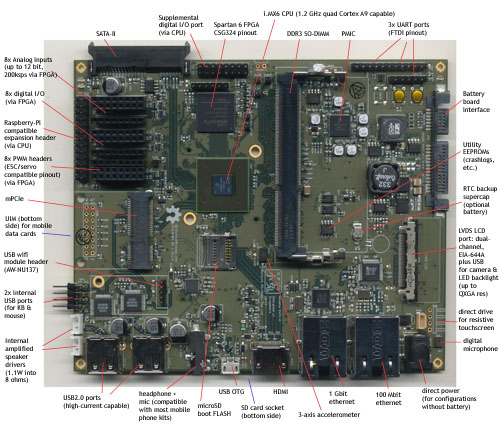
Novena is an open source hardware laptop project. It's also a peek into the future of computing, which will include relatively modest specified machines that we can actually assure ourselves are under our own control. Looking at this project reminds me of looking at early Mozilla builds. You see the potential for a world beater, but you know that it's a long way from doing what it needs to do to survive in the marketplace as more than a curiosity.
HT: +Josh Williams
Monday, March 3, 2014
IED futures
People ask me stuff. Occasionally I like to share the fun. In this case I'm interested in the future of IEDs about ten years out. Are they a fad born of poor logistics or a durable trend in improvising munitions? What are the constituent trends making the problem of IEDs better or worse and what's the net future for the world of IEDs?
Liberated from Work, Care for Your Folks
Now that the Obama administration has liberated large numbers of people from the workforce, they've also limited the danger that the newly liberated will have nothing to do by cutting home health for their parents.
There is no magic source of Obama dollars. It all has to get paid for or dumped on our children's shoulders. None of the adults in DC have dared to make an honest budget in decades that fully accounts for all future promised spending. They can hardly do it a year in advance anymore.
This is unsustainable.
HT: Instapundit
There is no magic source of Obama dollars. It all has to get paid for or dumped on our children's shoulders. None of the adults in DC have dared to make an honest budget in decades that fully accounts for all future promised spending. They can hardly do it a year in advance anymore.
This is unsustainable.
HT: Instapundit
Monday, February 24, 2014
Climate Change Public Policy
Climate change as policy is a chain of claims that depends on all of them to be true to justify the public policies that warmists like Al Gore have been advocating. If the chain breaks down along the way, there is no justification for proceeding along that policy course. People seem to forget that so here's a list of all the things that must be true for the green policies being advocated to make any sense whatsoever.
Climate Science:
1. Anthropogenic (man released) CO2 is a major component of climate warming
2. CO2 sensitivity must be high enough
3. CO2 effects must not dampen out too fast (i.e. logarithmic instead of exponential curve for CO2 effect)
4. The net of atmospheric feedback effects must be durably overcome by CO2
Economics:
5. Anthropogenic warming effects must be more expensive to adjust to than to prevent.
6. The discount rate for time preferences between now and 2100 must not exceed a certain value
7. Investment now in economic growth will not yield so much value that it's a superior use of funds over reallocating the resources to global warming prevention.
8. Technology will not change enough in the next 90 years to sufficiently change the costs to make waiting and managing the effects the more prudent course.
9. Purposeful planning on large scales and over decades will not suffer the sort of deviations en route that made a pathetic mockery of Soviet 5 year plans.
This list is not exhaustive. I'm omitting, for example, the issue of focusing adjustments exactly in the areas where purchasing power parity (PPP) indicates the money is least effective.
Every single one of these nine points has challengers. The amount of work proving points 8 and 9 are so minimal as to be laughable. It's just assumed to be justifiable as if we haven't had a century of data saying that the problems of long term state planning and government economic distortion are large and largely unsolvable, to a great extent because technology surprises require faster shifts than governments are capable of.
Every time I hear "the science is settled", it's invariably about points earlier up in the chain which establish that there's some sort of problem but do nothing regarding picking out a policy choice. But the policy choices among the warmists are settled at least as much as they view the climate science as settled.
All those policy choices were made without going through the actual trouble of establishing any of the basic economic groundwork. We're all supposed to acquire historical amnesia about economics. This magical rehabilitation of state solutions justifies permanently moving 1% of global economic product into the service of handling climate change for the next nine decades (the Stern Report's recommendation). It is a fantastic sum to be thrown at a problem using a methodology that is known bad.
Thursday, February 13, 2014
Mt Gox Exchange Collapse
The Mt. Gox exchange is engaged in a slow motion collapse, with accounts not allowed to withdraw in BTC at the present time. There is a $160 arbitrage opportunity as of writing for those brave enough to buy bitcoins at Mt. Gox and to hope that the market doesn't trend down to the Mt. Gox level before the exchange unfreezes and you get them out for sale elsewhere.
The collapse I'm referring to in the title is the collapse of Mt. Gox's credibility. This isn't a load issue, which looked bad but could be passed off as growing pains in a young currency. This is looking at a transaction that failed, not fixing it, and thinking that everything will be alright if whatever was wrong with the code failed infrequently enough. That's never acceptable. It's not the freeze or the technical mistakes that makes Mt. Gox dead to me. It's their poor management attitude that is exposed by the excuses they offer up in their statement justifying events. Mt. Gox committed suicide by press release and management is too stupid to understand that they've killed themselves.
Is there a Mt. Gox deadpool?
The collapse I'm referring to in the title is the collapse of Mt. Gox's credibility. This isn't a load issue, which looked bad but could be passed off as growing pains in a young currency. This is looking at a transaction that failed, not fixing it, and thinking that everything will be alright if whatever was wrong with the code failed infrequently enough. That's never acceptable. It's not the freeze or the technical mistakes that makes Mt. Gox dead to me. It's their poor management attitude that is exposed by the excuses they offer up in their statement justifying events. Mt. Gox committed suicide by press release and management is too stupid to understand that they've killed themselves.
Is there a Mt. Gox deadpool?
Wednesday, February 12, 2014
Counting
We have never been more able to actually count things in the history of the world. No need to guess, estimate, or interpolate when you can actually count it all out. But we don't do it, or we don't do it as much as we could.
Where we can count, we should. Where we can ask, we should. I do not go a day without noting somebody assuming where they could measure, estimating where they could count. It is no longer functional behavior but the less and less functional legacy of the pre-information age. The faster we are rid of the habits of guesswork, the better.
Thursday, February 6, 2014
Skyping Grandma
One of the great saviors of modern family life, I've found, when everybody is spread out over thousands of miles is Skype. It's relatively easy, flexible, powerful, and the grey brigade is taking too it pretty powerfully. I just recently came back from visiting my parents and relatives that I was sure I would never see working a computer were not only in my parents' address book but were online and available for conversation.
Older generation technology usage is very different than my generation or my kids' generation. They know that they don't know how to use these tools but generally are content to learn recipes by rote just to get communication going. But they pass on these recipes with the same sort of avid interest that they pass around knitting patterns. It's not a very well documented part of the technology world but it's real and it's growing. How that's going to change as my own generation ages and greys out is going to be fascinating, but I think I can wait to see it.
Older generation technology usage is very different than my generation or my kids' generation. They know that they don't know how to use these tools but generally are content to learn recipes by rote just to get communication going. But they pass on these recipes with the same sort of avid interest that they pass around knitting patterns. It's not a very well documented part of the technology world but it's real and it's growing. How that's going to change as my own generation ages and greys out is going to be fascinating, but I think I can wait to see it.
Tuesday, February 4, 2014
Newly Assertive Germany
Stratfor has a nice writeup on Germany's newly assertive foreign policy. Short version, Germany has no choice but to lead and however welcome that will be in the short term, it's going to put the usual pressures on Europe's political stage which will increase problems for the long-term.
Pax Americana is receding and there will be consequences to that, many of them unsettling. Have the germans grown up and are now capable of leading without bullying? It's an open question and one that has some really bad outcomes if the answer turns out to be no.
Pax Americana is receding and there will be consequences to that, many of them unsettling. Have the germans grown up and are now capable of leading without bullying? It's an open question and one that has some really bad outcomes if the answer turns out to be no.
Monday, January 27, 2014
Ugly labor force participation trends
You can hide a lot in plain sight in a simple graph. Here's one that has volumes hidden in plain sight.

By original estimates we were supposed to peak out in 2012 on labor force participation. Instead we're almost 4% under that figure and looking to fall further. That's a huge difference in how the US works, akin to the 1960s jump in participation but with the direction reversed. It points to a United States less able to pay its debts, less able to innovate, lead, and less able to support its military position which has historically been supported by the country's economic power. In essence it's a country that is rather short of hope for the future.
We're moving to a society with similar to 1940s labor participation rates but with a much more confused set of social expectations, something that is inevitably leading to less happiness in general. There are no convincing narratives out there why this very large secular trend should reverse. It might happen but nobody seems to have a good tale as to why. This year will see another 10 year labor force projection release. So far it is looking like the 2014 10 year estimate will be another "surprise" where the curves drop even further, even faster. December's rate was 62.8% after all. We weren't supposed to hit that until much later in the decade.
By original estimates we were supposed to peak out in 2012 on labor force participation. Instead we're almost 4% under that figure and looking to fall further. That's a huge difference in how the US works, akin to the 1960s jump in participation but with the direction reversed. It points to a United States less able to pay its debts, less able to innovate, lead, and less able to support its military position which has historically been supported by the country's economic power. In essence it's a country that is rather short of hope for the future.
We're moving to a society with similar to 1940s labor participation rates but with a much more confused set of social expectations, something that is inevitably leading to less happiness in general. There are no convincing narratives out there why this very large secular trend should reverse. It might happen but nobody seems to have a good tale as to why. This year will see another 10 year labor force projection release. So far it is looking like the 2014 10 year estimate will be another "surprise" where the curves drop even further, even faster. December's rate was 62.8% after all. We weren't supposed to hit that until much later in the decade.
Friday, January 17, 2014
Observed, minor uptick in russian BTC interest
My ongoing pay-to-click experiment is yielding a bit of odd metadata. I'm starting to see a number of cyrillic lettered ads. Chrome helpfully will translate them so there actually is some utility in their being shown me. It's odd to see and shows a different advertising aesthetic. At least one campaign is visually based on the idea of lending money to the mob.
It's probably nothing but gets tossed in the big mental pile of oddities that lurk around the back of my head.
It's probably nothing but gets tossed in the big mental pile of oddities that lurk around the back of my head.
Saturday, January 4, 2014
US politics by quadrants
Sometimes a stranger does you a great favor and enunciates what's been swimming around in your back brain for a very long time but never quite had the chops to make it to the forebrain. "The goal is to learn and once you have enough learning, the product becomes obvious."
It's not just product but political action that has the same dynamic. If you learn that, as a rule, government action is more efficient than private action, you default to doing everything via government. If the opposite, the default is to solve problems via private action. If you find that your rule (government/private) is strong, you won't look too hard for exceptions. If it is weak, you'll be more careful to do exception checking. These two questions underlie a lot of the political back and forth we have in the US. The hard, few exceptions pro-government solutions quadrant is discredited. This is where communism is as well as the no hopers of the Democrat party. The soft, many exceptions to the rule pro-government solutions quadrant is where you find a great deal of the Democrat party and a relatively small number of Republicans. The soft, pro-private action many exceptions quadrant is where you find the GOP establishment and the hard, pro-private action with little exceptions checking is where you find both the libertarians and the TEA party. Independents aren't committed to any particular quadrant but drift between the soft variants of government vs private provision.
Depending on the actual shape of reality, more information will strengthen one quadrant over the others but we haven't actually gathered enough information to be sure which quadrant works better. After the collapse of the USSR, we're only pretty sure that it's not the hard pro-government quadrant.
The actual confidence of adherents to each quadrant will emerge as metadata in fundraising for Citizen Intelligence because the entire purpose of the enterprise is to raise the information available to everybody along the spectrum. Those who are confident that their quadrant will benefit will support and are convinced the project will execute well will tend to support. Those with low confidence will not.
It's not just product but political action that has the same dynamic. If you learn that, as a rule, government action is more efficient than private action, you default to doing everything via government. If the opposite, the default is to solve problems via private action. If you find that your rule (government/private) is strong, you won't look too hard for exceptions. If it is weak, you'll be more careful to do exception checking. These two questions underlie a lot of the political back and forth we have in the US. The hard, few exceptions pro-government solutions quadrant is discredited. This is where communism is as well as the no hopers of the Democrat party. The soft, many exceptions to the rule pro-government solutions quadrant is where you find a great deal of the Democrat party and a relatively small number of Republicans. The soft, pro-private action many exceptions quadrant is where you find the GOP establishment and the hard, pro-private action with little exceptions checking is where you find both the libertarians and the TEA party. Independents aren't committed to any particular quadrant but drift between the soft variants of government vs private provision.
Depending on the actual shape of reality, more information will strengthen one quadrant over the others but we haven't actually gathered enough information to be sure which quadrant works better. After the collapse of the USSR, we're only pretty sure that it's not the hard pro-government quadrant.
The actual confidence of adherents to each quadrant will emerge as metadata in fundraising for Citizen Intelligence because the entire purpose of the enterprise is to raise the information available to everybody along the spectrum. Those who are confident that their quadrant will benefit will support and are convinced the project will execute well will tend to support. Those with low confidence will not.
Friday, December 20, 2013
21st Century Government - The Homestretch
I'm walking backwards, laying out a practical pathway to get to a decent vision of 21st century governance. The home stretch is all about implementing consensus to create 21st century governance. This is a consensus that doesn't currently exist but at this phase, the vision's been laid out, talked out, consensus has been forged and a critical mass of the politicians have come on board or been booted from office. Expectations have been reset and now it is time to get on with the work.
Actually implementing 21st century governance is exactly the sort of mid level work that many are claiming is disappearing and will never be seen again. Grabbing data and creating scripts to reformat for import, creating reports and even dashboards takes more patience than intelligence. It's production, and like most repetitive production does not require extremely high levels of intelligence to execute. Ordinary education, ordinary workers can accomplish the vast bulk of this job.
On the government end this is mostly accomplished by adding in requirements for openness into their normal IT development schedules and not with flashy big bang exercises that will suck up all their scarce IT dollars. After all, the only thing that they need do on their end is dump the raw data in a directory. It's such a simple task that it's going to be hard to explain why they would resist doing it. Once they do it, then it's up to the private sector to interpret the data into something that everybody can use.
Actually implementing 21st century governance is exactly the sort of mid level work that many are claiming is disappearing and will never be seen again. Grabbing data and creating scripts to reformat for import, creating reports and even dashboards takes more patience than intelligence. It's production, and like most repetitive production does not require extremely high levels of intelligence to execute. Ordinary education, ordinary workers can accomplish the vast bulk of this job.
On the government end this is mostly accomplished by adding in requirements for openness into their normal IT development schedules and not with flashy big bang exercises that will suck up all their scarce IT dollars. After all, the only thing that they need do on their end is dump the raw data in a directory. It's such a simple task that it's going to be hard to explain why they would resist doing it. Once they do it, then it's up to the private sector to interpret the data into something that everybody can use.
Thursday, December 19, 2013
Short J legs
J curves pop up in a number of unrelated fields. In political science, it's often viewed as a tradeoff between stability and openness with a short leg of increased stability at very low levels of openness and a long leg. Since Obamacare/ACA first took shape, I've been worried that we were in a 'j' curve situation with this legislation seeking to push us up the short leg, a policy dead end that would be politically difficult to reverse because any small reforms would actually make the situation worse. The axes on the graph being private economic activity on the x axis and effective medicine on the y axis.
The poor roll out and fundamental flaws being uncovered in Obamacare as it actually hits the real world actually ease my worries about it being a societal trap. It's working so badly that the resistance to reform may be weak enough to allow for incremental reform to be a real option. Let's not mince words, Obamacare is an expensive and dangerous flop. But it could be worse. It could set us up in the same trap that the UK has yet to escape from with its NHS and which Canada is only starting to escape with its health system.
The poor roll out and fundamental flaws being uncovered in Obamacare as it actually hits the real world actually ease my worries about it being a societal trap. It's working so badly that the resistance to reform may be weak enough to allow for incremental reform to be a real option. Let's not mince words, Obamacare is an expensive and dangerous flop. But it could be worse. It could set us up in the same trap that the UK has yet to escape from with its NHS and which Canada is only starting to escape with its health system.
Tuesday, December 17, 2013
21st century government - the end game
Sometimes it's just easier to start with the end game. When governance finally catches up to the technological/information revolutions unfolding around it, what will it look like?
The operations of government will be known (at least the non-classified ones, which is the vast bulk of money spent and world impact). They will be measurable and measured, and responsibility will be clearly fixed and verified. These performance indicators will be available online for any automated system to pick up in real time and individual citizens will have their own dashboards of the key performance indicators (KPI) that they personally think matter. Some will hand assemble them. Others will just pick the public KPIs of people that they trust. Most will combine both techniques.
Elections will still sometimes devolve into popularity contests but recalls will become more common as incompetence can no longer be hidden so well.
None of this is science fiction. None of this even requires very innovative technical solutions. It's all plain vanilla technology that's been in production use for decades in the private sector.
It's an attractive future, purged of a lot of the inefficiencies and foolishness that happens at present. We can do this. Faster please.
The operations of government will be known (at least the non-classified ones, which is the vast bulk of money spent and world impact). They will be measurable and measured, and responsibility will be clearly fixed and verified. These performance indicators will be available online for any automated system to pick up in real time and individual citizens will have their own dashboards of the key performance indicators (KPI) that they personally think matter. Some will hand assemble them. Others will just pick the public KPIs of people that they trust. Most will combine both techniques.
Elections will still sometimes devolve into popularity contests but recalls will become more common as incompetence can no longer be hidden so well.
None of this is science fiction. None of this even requires very innovative technical solutions. It's all plain vanilla technology that's been in production use for decades in the private sector.
It's an attractive future, purged of a lot of the inefficiencies and foolishness that happens at present. We can do this. Faster please.
Thursday, December 12, 2013
Could bitcoin immunize the dollar against inflation?
Bitcoin currency fluctuation is rapid, large, and pretty much continual. This doesn't disqualify the currency for use, but it does incent people to be on their guard for opportunities and threats on the inflation/deflation front. This is very unlikely to change and without some sort of dominant swing provider of liquidity and sink of value, (akin to what the Saudis do for the oil market) we're unlikely to see the currency ever stabilize.
Now is this a good thing or a bad thing? I think it is ultimately going to be a good thing.
Most people, seeing this, will not dump all their value into bitcoin. They will put in single digit or fractional parts of 1% of their net worth as speculative investment. The roller coaster of BTC valuation is too quick and violent for anything else and the combination of global availability without limit and permanent, severe limits on supply make this a persistent condition.
The difference in outlook between when you are dealing with 10 or 11 currencies is very small. The difference in dealing with 1 or 2 currencies is much larger. There's an interesting, and useful state change that occurs, especially if one of those currencies is always fluctuating. You become much less likely to be complacent about currency valuation changes. Tools for dealing with your fast fluctuating currency will naturally migrate and expand their watch over your more stable, main currency. This reduces the possibility for central bankers to induce useful (to them) inflation where the value of the currency is leached away in an invisible tax that does not provoke generalized behavior changes in the population.
The tools are not yet there but are foreseeably going to be part of our 21st century wallets.
Now is this a good thing or a bad thing? I think it is ultimately going to be a good thing.
Most people, seeing this, will not dump all their value into bitcoin. They will put in single digit or fractional parts of 1% of their net worth as speculative investment. The roller coaster of BTC valuation is too quick and violent for anything else and the combination of global availability without limit and permanent, severe limits on supply make this a persistent condition.
The difference in outlook between when you are dealing with 10 or 11 currencies is very small. The difference in dealing with 1 or 2 currencies is much larger. There's an interesting, and useful state change that occurs, especially if one of those currencies is always fluctuating. You become much less likely to be complacent about currency valuation changes. Tools for dealing with your fast fluctuating currency will naturally migrate and expand their watch over your more stable, main currency. This reduces the possibility for central bankers to induce useful (to them) inflation where the value of the currency is leached away in an invisible tax that does not provoke generalized behavior changes in the population.
The tools are not yet there but are foreseeably going to be part of our 21st century wallets.
Monday, December 2, 2013
Bitcoin libel from the Tea Party Economist
Normally I like Gary North and try to make the time to read his tea party economist piece every time it hits my email box. Not this time though as he has a bit of a bait and switch article about bitcoins. Titled "Bitcoins: The Second Biggest Ponzi Scheme in History", he alleges a number of facts that simply aren't true. And of the facts he uses that are true, none of them make bitcoin a ponzi scheme.
Bitcoin has a known dynamic. There were a few coins at the beginning, mining commenced and as new coins are discovered, whoever registers the discovery to the network first gets the coins. There is a known, maximum number of coins. BTC is divided down to 8 decimal places. There is nothing preventing redenomination to even further levels of divisions so that BTC remains a practical solution for microtransaction payments. It's actually not that hard or expensive to switch over though it is certainly not necessary today.
My opinion is that BTC will form part of a stable of different alternative money forms that each fulfill different roles and that we're going to end up managing our cash as we manage our investments. Eventually BTC will die, but I see a death that is more like the Deutsche Mark than one like the Zimbabwean Dollar.
Bitcoin has a known dynamic. There were a few coins at the beginning, mining commenced and as new coins are discovered, whoever registers the discovery to the network first gets the coins. There is a known, maximum number of coins. BTC is divided down to 8 decimal places. There is nothing preventing redenomination to even further levels of divisions so that BTC remains a practical solution for microtransaction payments. It's actually not that hard or expensive to switch over though it is certainly not necessary today.
My opinion is that BTC will form part of a stable of different alternative money forms that each fulfill different roles and that we're going to end up managing our cash as we manage our investments. Eventually BTC will die, but I see a death that is more like the Deutsche Mark than one like the Zimbabwean Dollar.
Friday, November 29, 2013
NY Times Classifieds
Seth Godin reads the NY Times so I don't have to. Their classified section is down to one page from the 20-30 that he remembers it being way back when. His description of the utter fail of their job market advertisements led me to ask how much are they asking for the things. It turns out their classifieds can be done through a self-serve ad portal and their rates vary from somewhere between $20-$30 per line (1 line = 1.83 inches = 22 to 25 characters depending on the width of the letters). That's some pretty expensive ad real estate.
I admit that I'm morbidly curious. There's a poignant sadness to any dying art form and classified job listings are an art form, one with its own conventions and peculiar requirements.
What's the last job advertised in the NY Times going to be for? And what were the last jobs advertised in papers that have already ceased publication?
I admit that I'm morbidly curious. There's a poignant sadness to any dying art form and classified job listings are an art form, one with its own conventions and peculiar requirements.
What's the last job advertised in the NY Times going to be for? And what were the last jobs advertised in papers that have already ceased publication?
Bitcoin deflation
Today, right this minute, we have a massive natural experiment in deflation going on. The demand for Bitcoin (BTC) is far outstripping any increase in supply. If this were a national currency, the central bankers would have been institutionalized for their nervous breakdowns quite some time ago. It would be front page news every day and panic would rule the airwaves.
None of this is happening with Bitcoin. BTC insiders, movers and shakers seem pleased with the increase in value for their currency and the worry is the appreciation of the currency will go away, not that it will continue. Bitcoin pessimists like Paul Krugman, not surprisingly, believe that deflation will lead to transaction collapse and hoarding. Reality, so far, disagrees with them.
I think that the problem is that nobody among the pessimists understands what BTC is for. It's never going to be the legally mandated monopoly currency in any significant economic zone. The ethic of the BTC community works against that. This means that BTC is not competing against the US dollar, the euro, or even the renminbi.
What bitcoin does very well is create a space for moving currency without the ability for it to be stopped. That challenges national currencies in crisis that want to impose currency controls to stop money leaving their borders. You can't stop BTC transactions without draconian controls on communications.
As a practical matter, you can't stop a coin key from crossing borders. It also creates an incredibly small unit of currency. The smallest unit in the BTC world is the satoshi, or 0.00000001BTC. Is there any currency in the world that equals one satoshi? Until bitcoin reaches the point where its smallest transactions (looking at ads and other microtransactions) can no longer be done with single satoshis, BTC will not suffer transaction reduction to to value increase.
Current pricing would seem to imply something of a damper on BTC transaction flow when BTC rises above $100,000 USD per coin. In other words, the cheapest, cheapskate ads are offering a hundred satoshis for a second of your attention in a world where 1BTC is approximately 1,000USD. We have a long way to go before those transactions cease to be denominated in BTC. And even then, there will be prestige associated with working in BTC which will keep interest in the currency relatively high and larger transactions flowing around the $100k level. Any reduction will bring back a number of the bottom feeders from other currencies.
There are several wannabe BTC competitors waiting in the wings for the day that people want to conduct microtransactions smaller than 1 satoshi. They have established exchanges with national currencies and with BTC itself. when BTC grows in value sufficiently to give up the low end of its microtransaction market, the marketers will move on to alternatives until one of them gains enough advantage to be the next BTC.
Ultimately, BTC is about mad money for a lot of people. As an experiment, I've mined BTC overnight and done micro-tasks using the thing in my spare time. Since April of this year, without any impact on my productivity, I've gotten the price of a fairly nice night out with my wife in BTC right now. It's a piece, but only a piece, of an emerging 21st century wallet which diversifies currency use and manages transactions both online and offline. That wallet probably won't fully emerge for a decade at the very least and more likely will take two to really standardize but it will be the death of the ability of national currencies to live on their past reputations. People will gain the ability to react to currency foolishness much more quickly. BTC will be an important part of that technology suite.
crossposted: Chicago Boyz
None of this is happening with Bitcoin. BTC insiders, movers and shakers seem pleased with the increase in value for their currency and the worry is the appreciation of the currency will go away, not that it will continue. Bitcoin pessimists like Paul Krugman, not surprisingly, believe that deflation will lead to transaction collapse and hoarding. Reality, so far, disagrees with them.
I think that the problem is that nobody among the pessimists understands what BTC is for. It's never going to be the legally mandated monopoly currency in any significant economic zone. The ethic of the BTC community works against that. This means that BTC is not competing against the US dollar, the euro, or even the renminbi.
What bitcoin does very well is create a space for moving currency without the ability for it to be stopped. That challenges national currencies in crisis that want to impose currency controls to stop money leaving their borders. You can't stop BTC transactions without draconian controls on communications.
As a practical matter, you can't stop a coin key from crossing borders. It also creates an incredibly small unit of currency. The smallest unit in the BTC world is the satoshi, or 0.00000001BTC. Is there any currency in the world that equals one satoshi? Until bitcoin reaches the point where its smallest transactions (looking at ads and other microtransactions) can no longer be done with single satoshis, BTC will not suffer transaction reduction to to value increase.
Current pricing would seem to imply something of a damper on BTC transaction flow when BTC rises above $100,000 USD per coin. In other words, the cheapest, cheapskate ads are offering a hundred satoshis for a second of your attention in a world where 1BTC is approximately 1,000USD. We have a long way to go before those transactions cease to be denominated in BTC. And even then, there will be prestige associated with working in BTC which will keep interest in the currency relatively high and larger transactions flowing around the $100k level. Any reduction will bring back a number of the bottom feeders from other currencies.
There are several wannabe BTC competitors waiting in the wings for the day that people want to conduct microtransactions smaller than 1 satoshi. They have established exchanges with national currencies and with BTC itself. when BTC grows in value sufficiently to give up the low end of its microtransaction market, the marketers will move on to alternatives until one of them gains enough advantage to be the next BTC.
Ultimately, BTC is about mad money for a lot of people. As an experiment, I've mined BTC overnight and done micro-tasks using the thing in my spare time. Since April of this year, without any impact on my productivity, I've gotten the price of a fairly nice night out with my wife in BTC right now. It's a piece, but only a piece, of an emerging 21st century wallet which diversifies currency use and manages transactions both online and offline. That wallet probably won't fully emerge for a decade at the very least and more likely will take two to really standardize but it will be the death of the ability of national currencies to live on their past reputations. People will gain the ability to react to currency foolishness much more quickly. BTC will be an important part of that technology suite.
crossposted: Chicago Boyz
Friday, November 22, 2013
Wikistrat report
I just logged in to Wikistrat and found that a new report is available and is ok for public distribution (much of the product generated there is not ok to distribute). Here's a fairly recent crowdsourced report on the idea of resource wars. It covers most of the bases fairly well and provides a few insights I haven't seen elsewhere. I like where we ended up on this, a fair, even-handed, thought provoker. It won't answer whether the techno-optimists will continue to win over the malthusians but it does help you argue your chosen side on that debate on a higher level.
Subscribe to:
Posts (Atom)